Ambiguous Origins

The land of ambiguous origins, glamorous gametes, and the surreal life of the fabulously pedigree-challenged.

Monday, March 19, 2007

Made In Korea at the San Francisco Asian-American Film Festival

I had a fabulous opportunity to get my first look at a couple of films being shown as a part of the San Francisco International Asian-American Film Festival. My friend, Geneva took me along with her to Berkeley since she was doing a film review of Made In Korea: One Way Ticket Seoul-Amsterdam. The documentary starts out as a filmmaker's attempt to reunite with the eight other Korean adoptees who flew into the Netherlands in 1980 as babies. He finds one of those adoptees, who ends up becoming his girlfriend. Her story of reuniting with her birthmother in Korea, stirs up curiosity in him, where there was none before.

To In-Soo Radstake, he was just a typical Dutchman who really didn't think of himself as Korean. With the support of his girlfriend, he embarks on visits to Korea that really open up his feelings regarding being adopted and cultural identity. This was a very well done documentary. Most adoption-related documentaries are from the view of female adoptees who have already embraced the whole search for one's roots. It was refreshing to see a male adoptee speak up from a more skeptical and pragmatic point-of-view. It was also refreshing to see a male adoptee be able to show his more emotional moments during his search that he shares with his girlfriend, who is clearly his emotional support.

As an adopted person, I felt for him when he hit "the wall of shame" in regards to his own information about the facts surrounding his birth. He declares without a hint of doubt that the information contained in the orphanage's file is his own information. Without his own birth occuring that file would never exist. The film shows that in order to get simple information about oneself, adopted persons have to get creative and trick people into releasing information. When official channels fail to locate his birth mother, he quite reluctantly goes on reunion shows he detests. It reminded me of the time before the Internet adoption search community evolved where it seemed the only way to search was to go on daytime talkshow reunion episodes. Part of what turned me off on the concept of searching is that I also detested such shows and felt if that is the only way to search it isn't worth it. I had to wait until there were more discreet ways to search.

After the screening, Geneva and I had the opportunity to meet with the In-Soo and his girlfriend, Ungila. It turns out that Insoo didn't really want to turn the camera on himself, but his producer thought it would be more compelling if it centered on his point-of-view as an adopted person. In-Soo admits now that the producer was right. In the film, there are brief profiles on a couple more of the adoptees he found that had mixed experiences when they went to Korea and found their birth family. This seemed to serve to temper his expectations are raised somewhat by Ungila's experiences.

When asked about how he feels now on the completion of the film and showing it in regards to feeling he is Dutch or Korean, he says he definately feels Korean. The film has brought out a lot of Koreans, particularly adopted Koreans. It seemed to me that the language barrier and being from a more progressive country while being confronted with a more closed Korean society does present challenges in feeling Korean.

I talked to Ungila and it turns out that it was her Dutch mother who asked her at 14 if she could search for her because if she waited until later it might be more difficult to find. In the film, Ungila's mother is clearly deep in guilt over not being able to raise who she feels is her daughter. She says through an interpretor that she feels always a sinner and doesn't see the use of digging up the past. I learned after the film that it was her birthfather's family who gave her up after a divorce without telling the mother until Ungila was in Holland. In Korea, when couples divorce, custody goes to the father. Ungila's Dutch parents and her birth mother stay in touch despite not speaking each other's language. They call each other, greet each other in each others language, giggle, and hang up.

Saturday, February 03, 2007

Kurds!!!!!

Friday, January 26, 2007

YO


THIS BE ONE ABANDONED BLOG

Sunday, November 19, 2006

November 8, 1996


Two are dead, the rest are mothers.

Gavi

Gavi's alt.adoption archive

Tuesday, October 17, 2006

The "Go Figure" File

Northern Korea is acting up threatening another nuclear test and cnn choses to make Madonna's adoption top story. Why is a rich person adopting a child from a desperately poor country news anymore? I don't get it. World War III might arrive and we will be facinated by celebrities personal lives.

Congrats Material Girl! You just might not want to visit here.

Saturday, October 07, 2006

I'm Nobody


I'm Nobody! Who are you?
Are you—Nobody—Too?
Then there's a pair of us!
Don't tell! they'd advertise—you know!

How dreary—to be—Somebody!
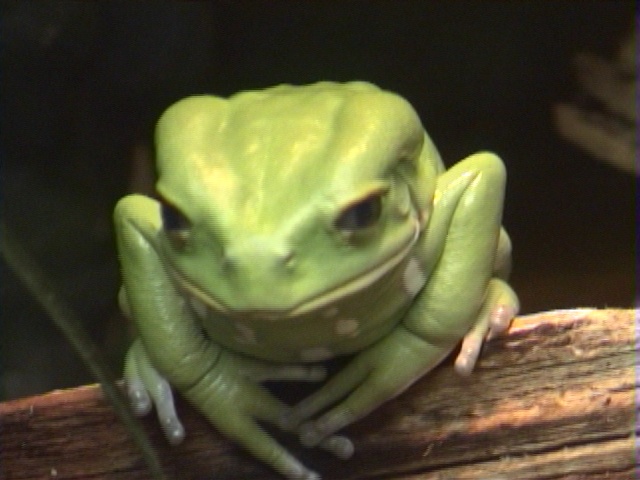
How public—like a Frog—
To tell one's name—the livelong June—
To an admiring Bog!

by Emily Dickenson

Friday, October 06, 2006

Ambiguous Origins

am‧big‧u‧ous: 1. of doubtful or uncertain nature; difficult to comprehend, distinguish, or classify: a rock of ambiguous character. —Synonyms 1. ambiguous, equivocal, cryptic, enigmatic.
or‧i‧gin: 1. ancestry; parentage; extraction: to be of Scottish origin. 2. the first stage of existence; beginning. 3. something from which anything arises or is derived; source; fountainhead. —Synonyms 1. root, foundation. 4. birth, lineage, descent. [Ancestry: “We cannot escape our origins, however hard we try” (James Baldwin).]


It was really difficult to come up with an appropriate name for this blog. We didn't want to call it Voices of Adoption, the moniker for Denise's highly successful adoption website. That website was a nexus for supporting everyone touched by adoption. It was a lot of work being everything to everybody. This blog isn't about search and support. We didn't want to invoke the whole Bastardy thing again, because this isn't a adoptee rights blog.

Instead, we want to explore the adoptee experience post-reunion, post-adoptee rights, and post-adoption adoption conferences. What is the rather salty and world weary, but eternally pedigree-challenged and glorious gametes go to chatup our experience? Right here hopefully.

This is not a place for searchers, since this place just don't have the resources to really deal with those requests. It can point you to a couple of reliable sources on the blogroll.

Adult adoptees as individuals they are have a wide array of experiences when it comes to their experiences and attitudes toward their birth and adopted families, just like non-adopted folk. It doesn't matter the condition of these connections, they are still real. Estrangement through one's personal choice or chosen by the State doesn't make familial connections less real. As adults we have the ability to chose who we consider family, and not the state or anyone else who happens to have an opinion.

What makes our familial connections and rights ambiguous is the State and the laws that keep adult adoptees original birth certificates sealed. One can trace both adopted and birth relatives' roots to the 1200s, and yet our society doesn't quite see us belonging either place. Whether it's people asking us, "When are you going to find your real parents" or telling use, "your real parents didn't want you." It really doesn't matter to the State or society that both adopted and birth relatives are rather receptive about us being part of their family.

Some of us just want the peace of mind that we can choose not to care about our origins.

It is a ambiguous existence because you can spend years not thinking about being adopted and then you get a harsh reminder that you are pedigree-challenged. You know who your are, but you just can't prove it.